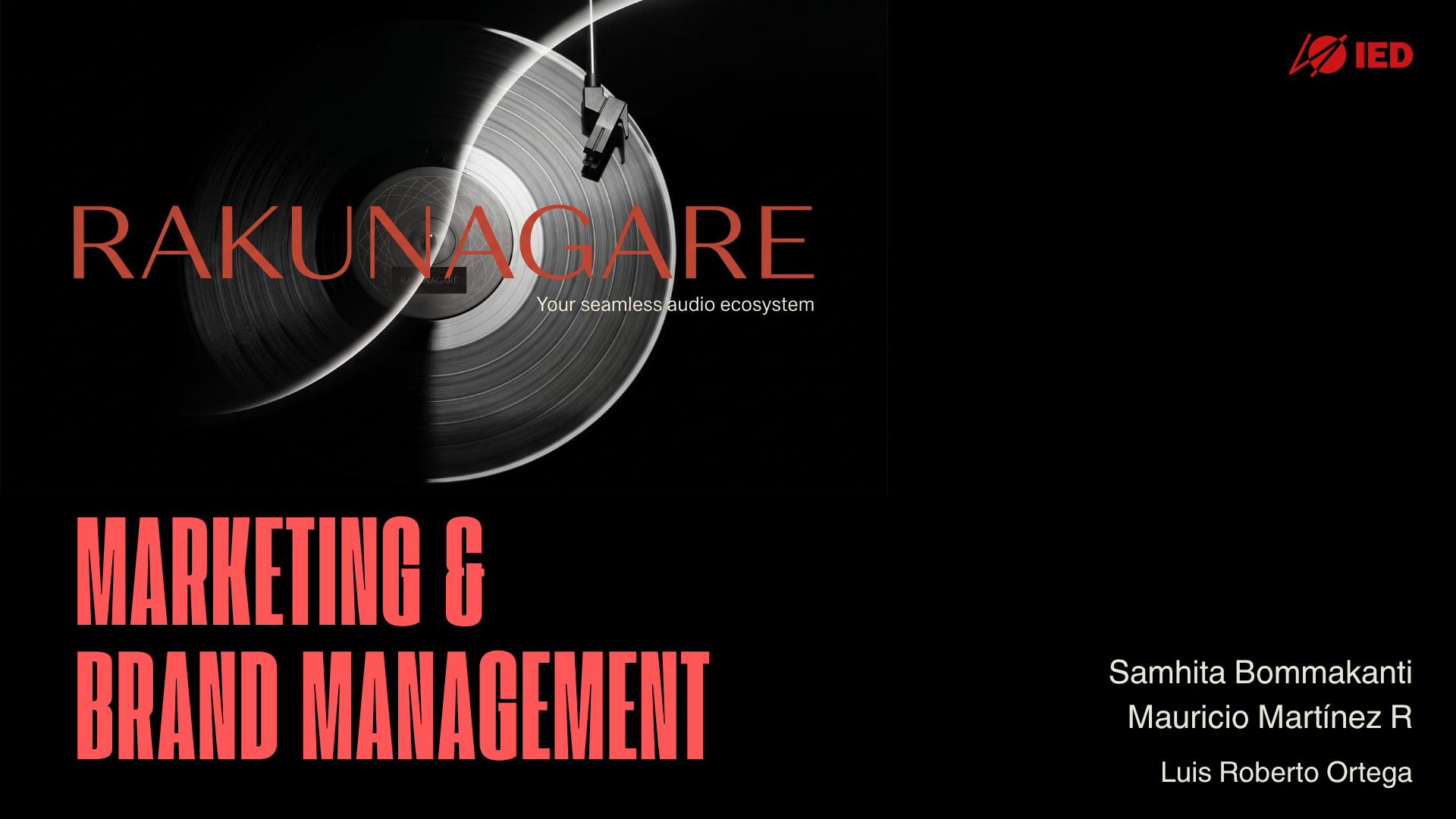
Academic project, M.A. Strategic Design Management, IED Barcelona. Not affiliated with Audio-Technica.
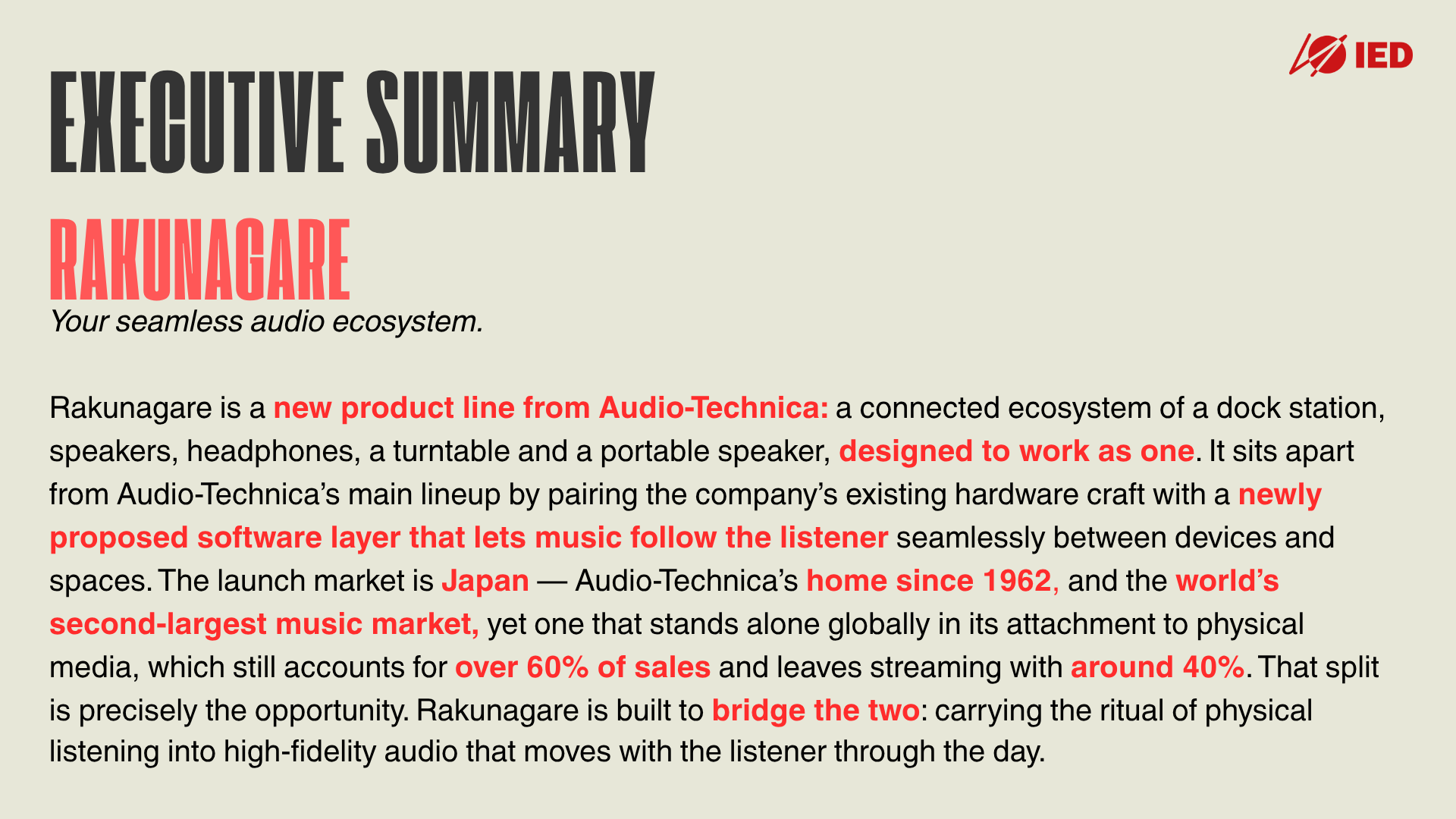
The problem
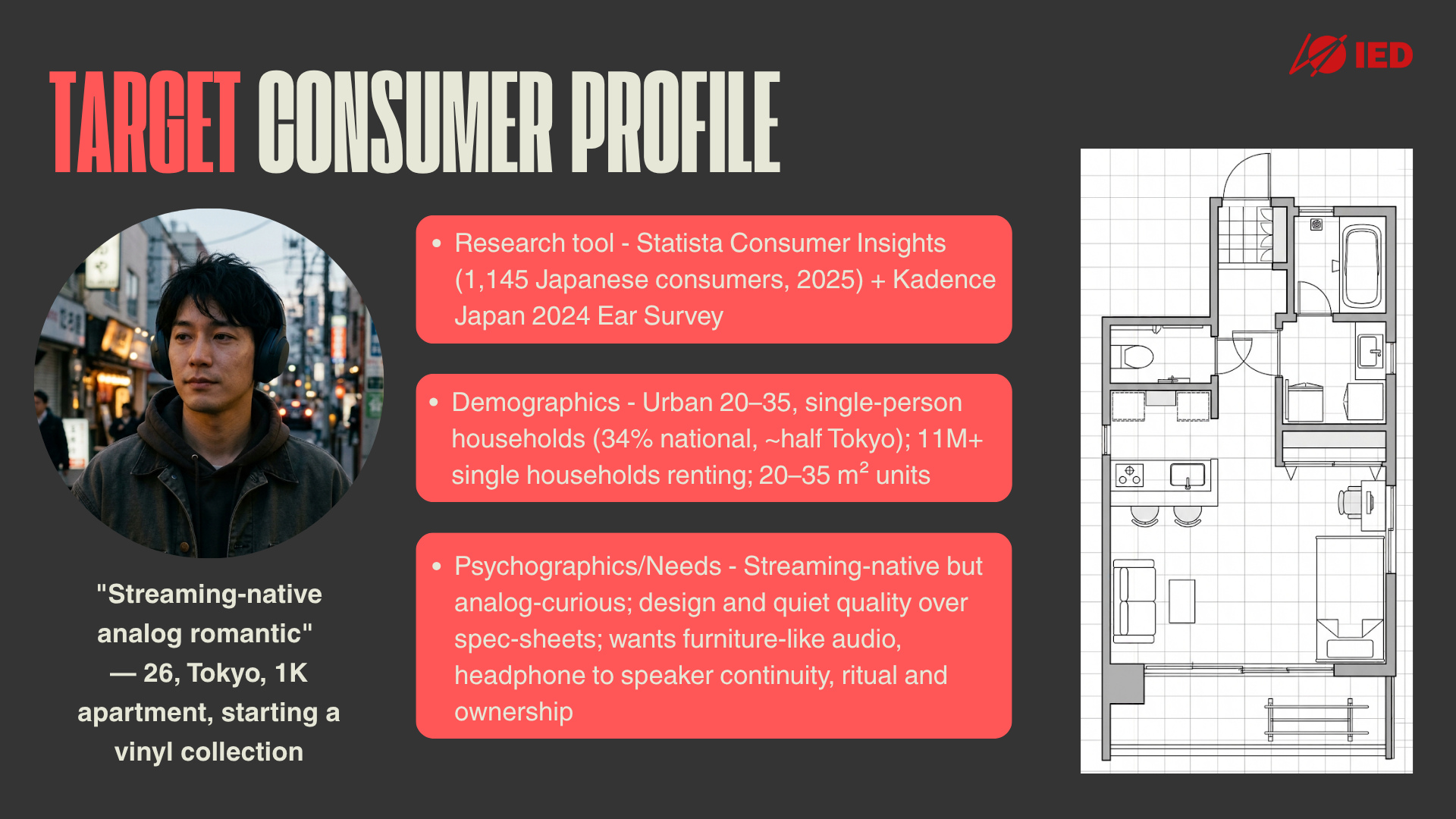
Japan is the second-largest music market on earth, and the only one where physical and streaming never merged. Records on the shelf, streaming in the headphones, nothing connecting them. Meanwhile a twenty-six-year-old in a twenty-five-square-metre Tokyo flat loses her music four times a day, leaving home, boarding the train, arriving, unplugging. Everyone sells the object. Nobody owns the gap where listening actually breaks.
The research
1,145 Japanese consumers surveyed by Statista. The Kadence Japan Ear Survey. Vinyl production up 26% in a single year, driven by Gen Z. A third of households living alone, half of Tokyo. Street prices pulled from kakaku.com so the pricing stood on real numbers. One finding redirected everything: reported streaming usage adds up to 160% of the subscriber base. Japanese listeners don’t choose a service, they run several.
The process
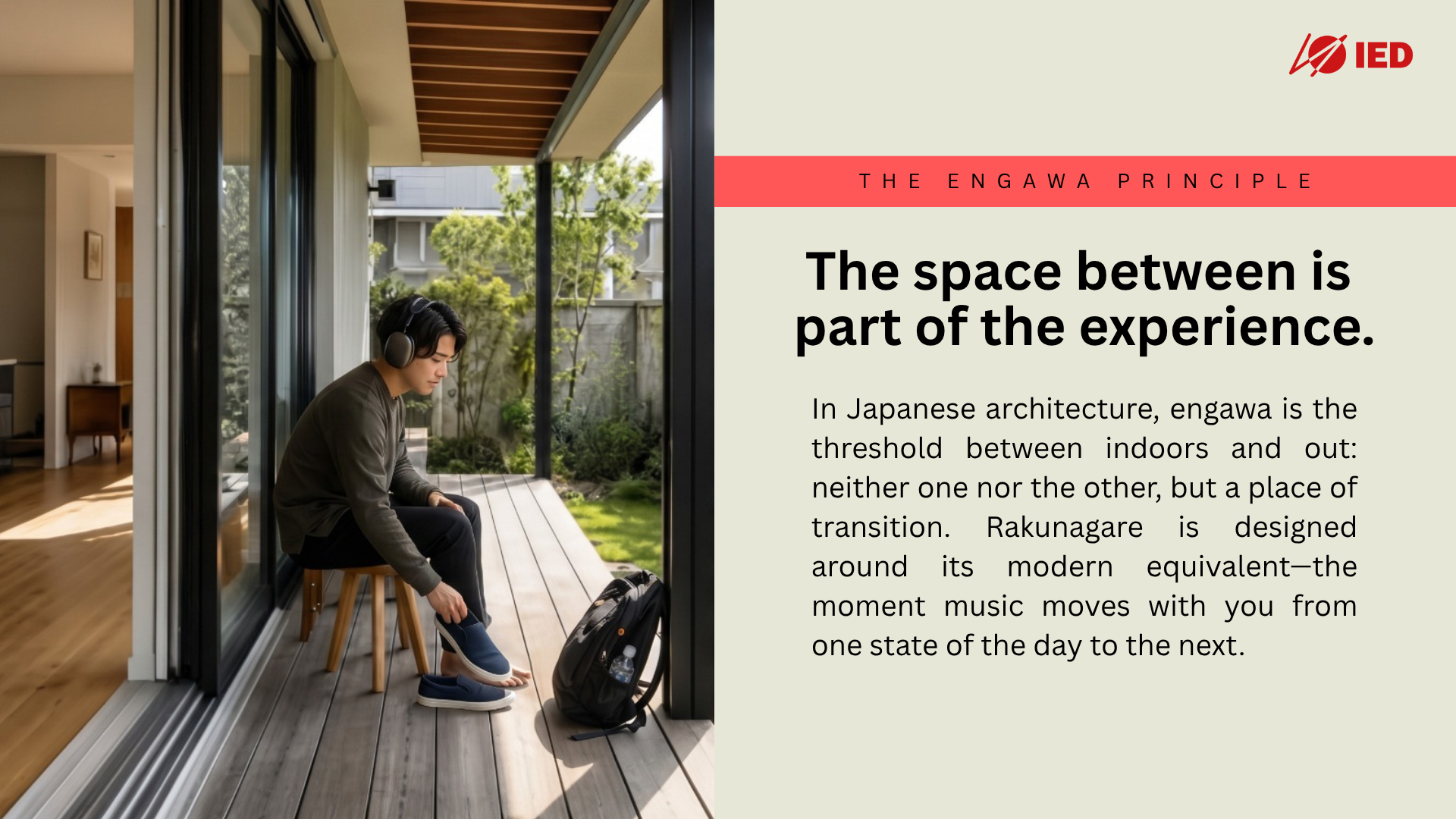
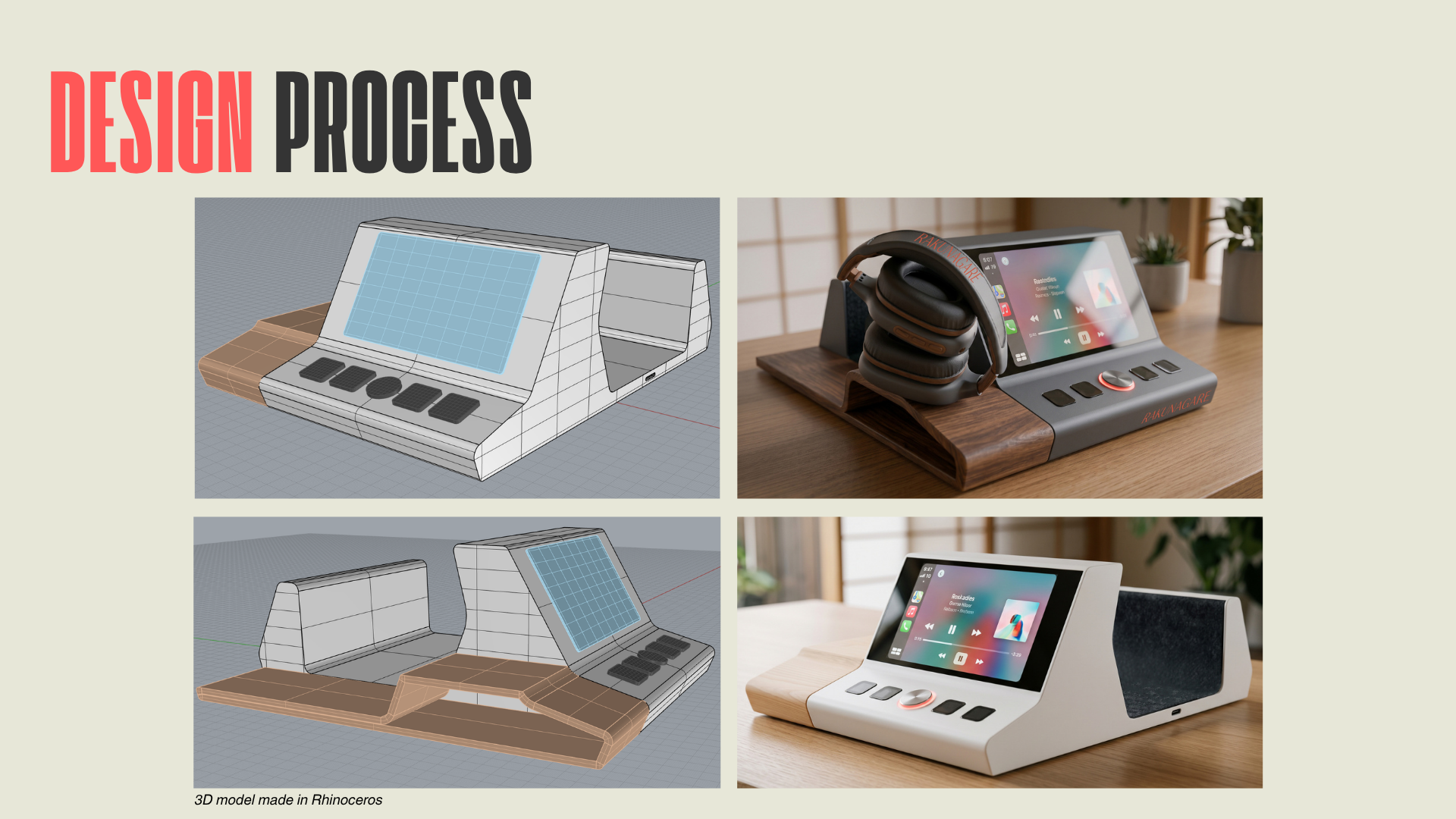
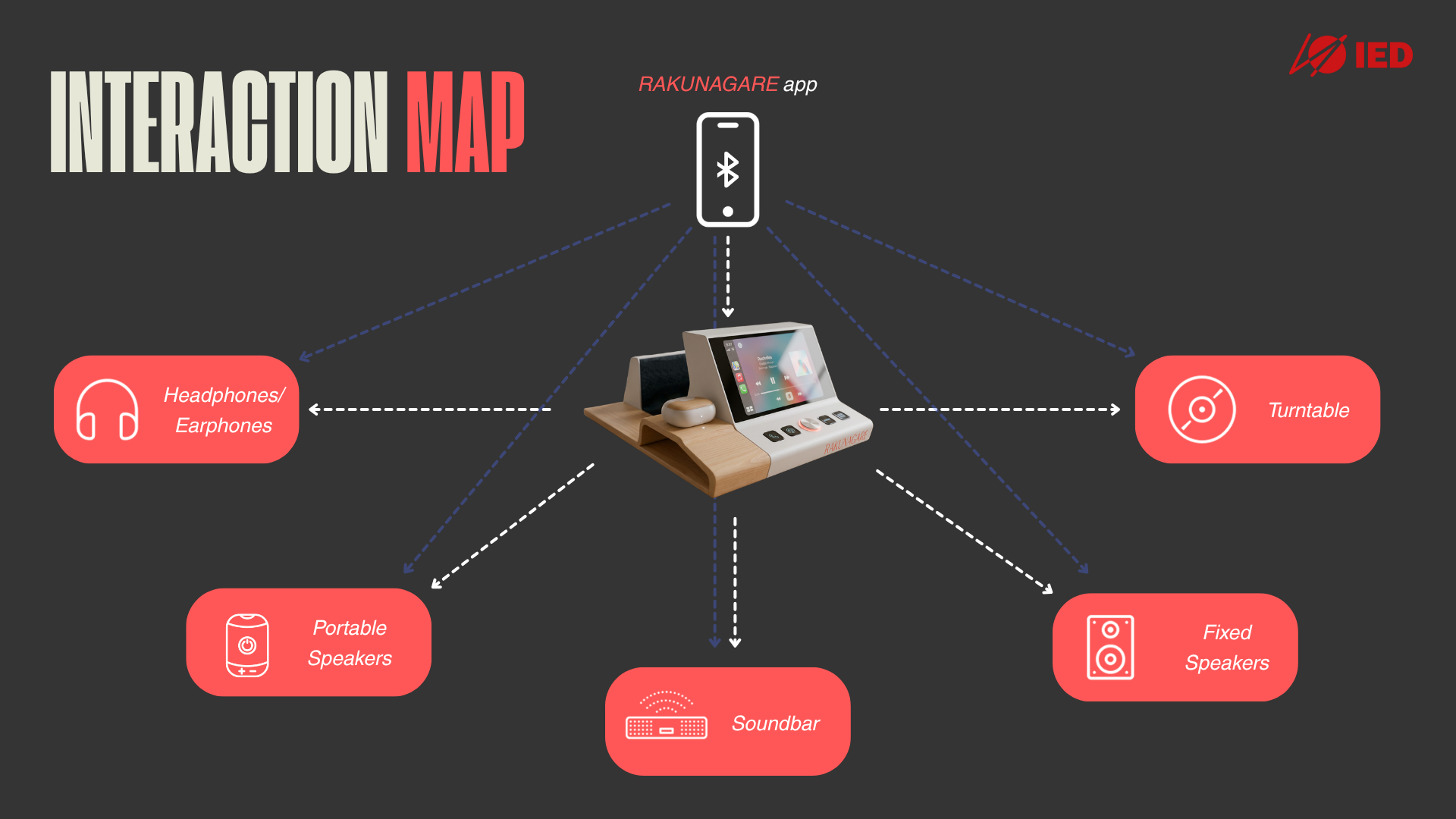
The dock came first, because the research demanded it: if the problem is the gap, the product stands in the gap. Six products resolved into two families, Carry and Dwell, with the dock as the threshold between them, named for the engawa, the verandah of a Japanese house that is neither inside nor out. Form studies, Rhino model, renders, interaction map, price architecture, launch plan.
The decision
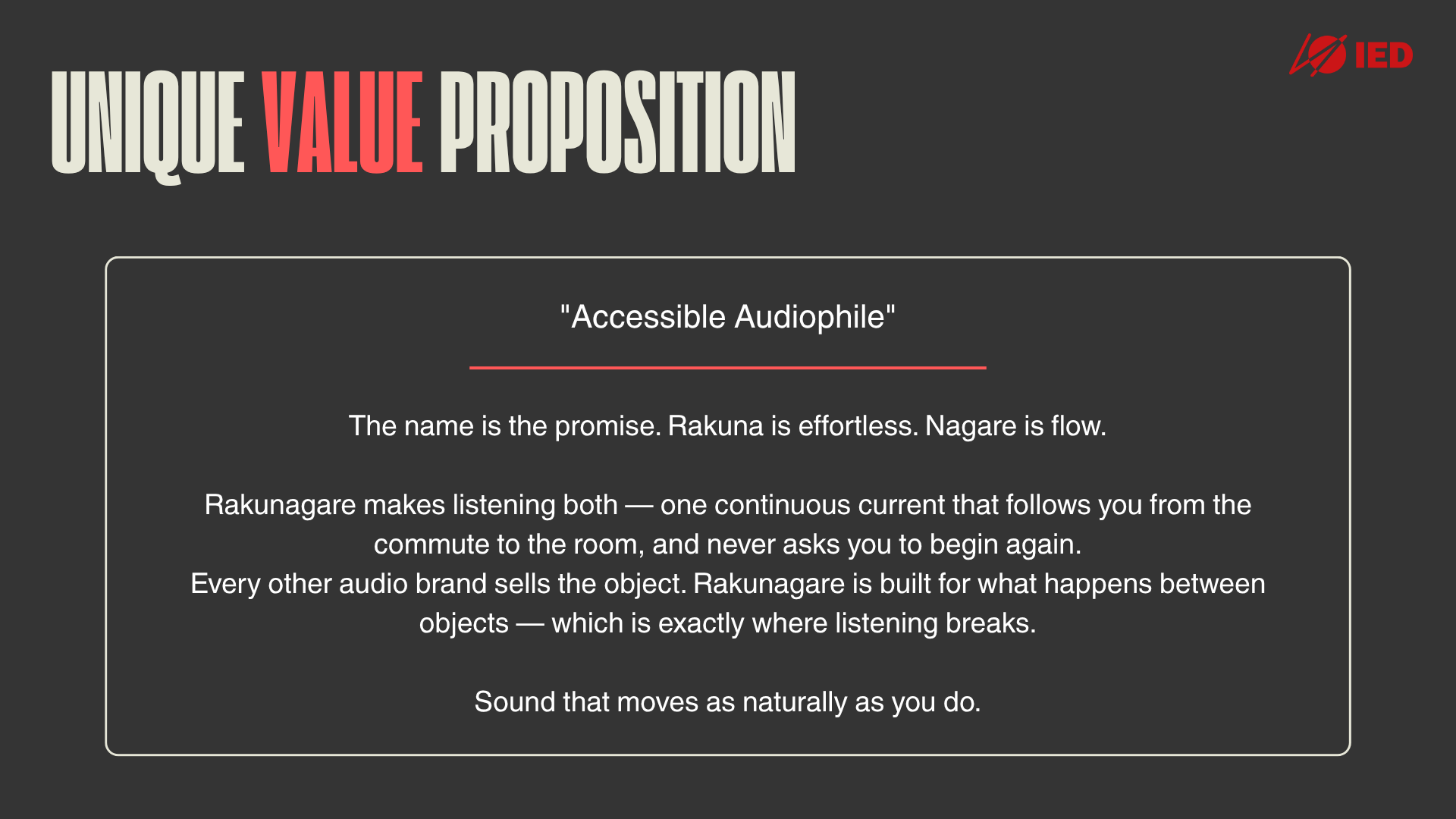
We cut the streaming partner. Audio-Technica would build everything, hardware and software, not to close the system, but to keep it open. A layer owned by the hardware company can carry any service; one owned by a platform never can. So every buyer picks their own at setup, and each platform funds its own vouchers. Neutrality stopped being a gap and became the product’s sharpest argument.
The outcome
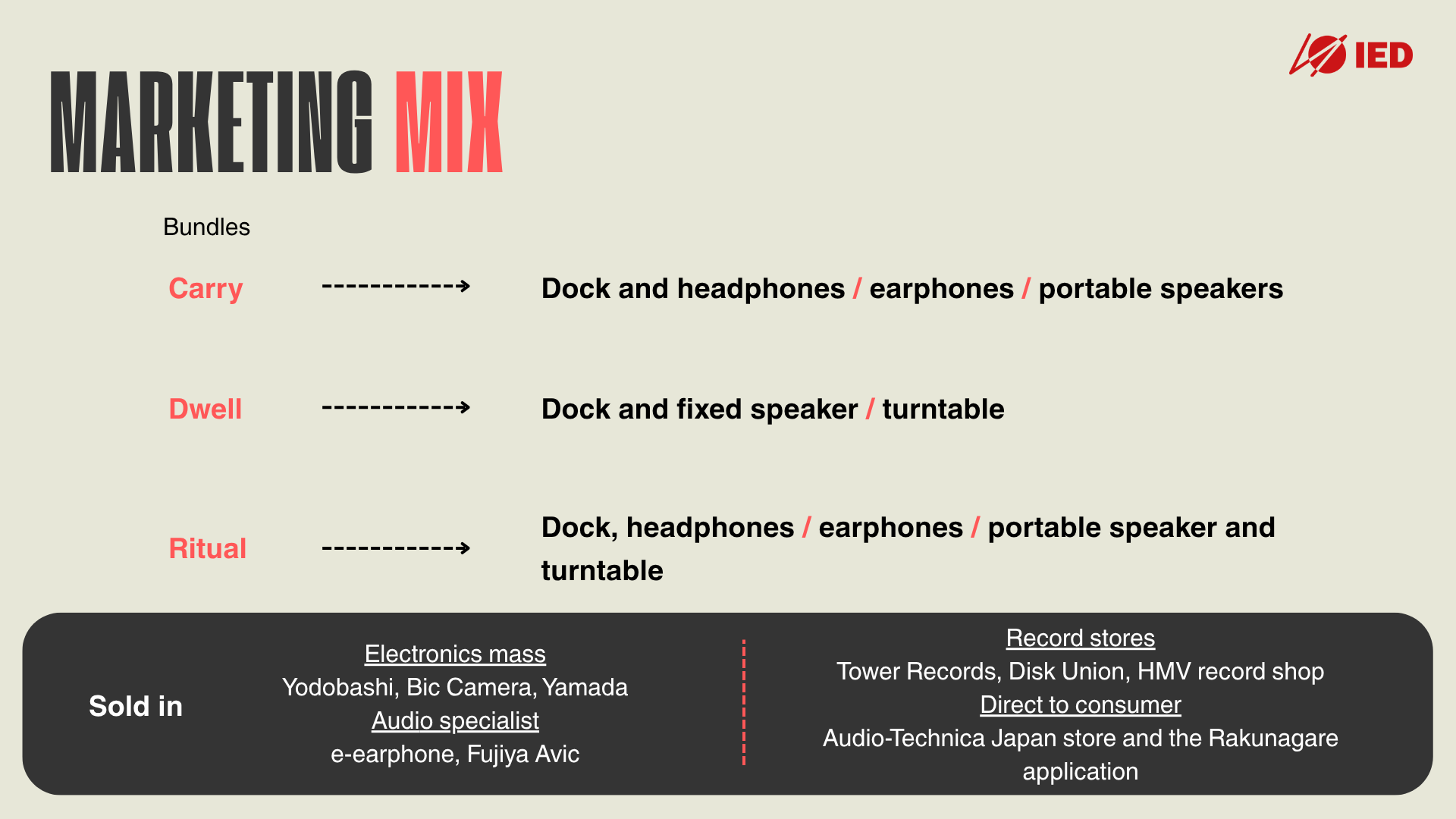
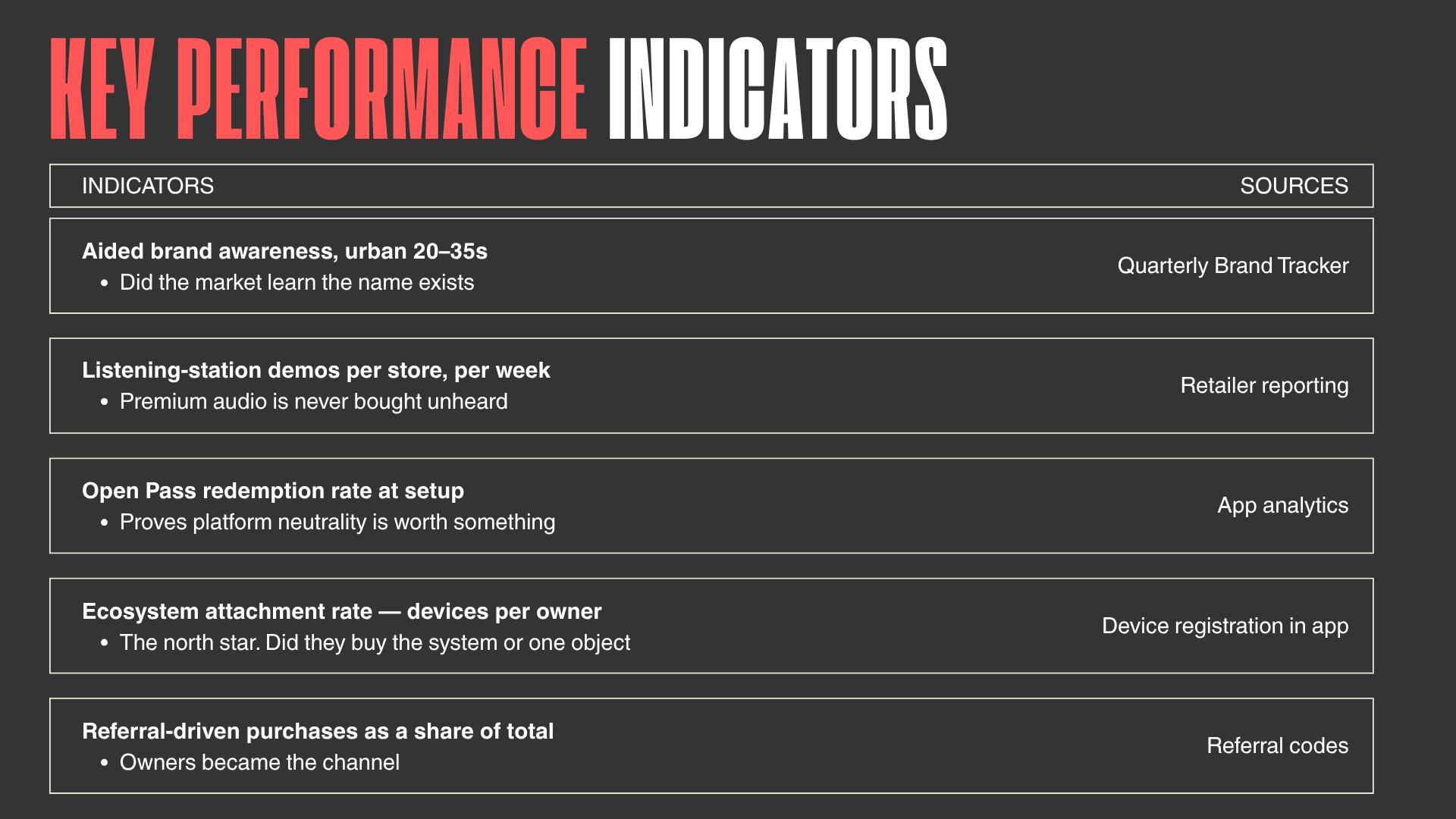
A complete system, insight to execution: six products architected and modelled, pricing anchored in two currencies, four distribution channels, a five-stage funnel, a six-month launch. Nineteen metrics cut to five, with one north star, attachment rate, devices per owner. Awareness can be bought and units discounted into existence; attachment is the only proof that owners believed in the ecosystem rather than in a single object.
Spain: Public Healthcare System