1. A key that doesn’t know you
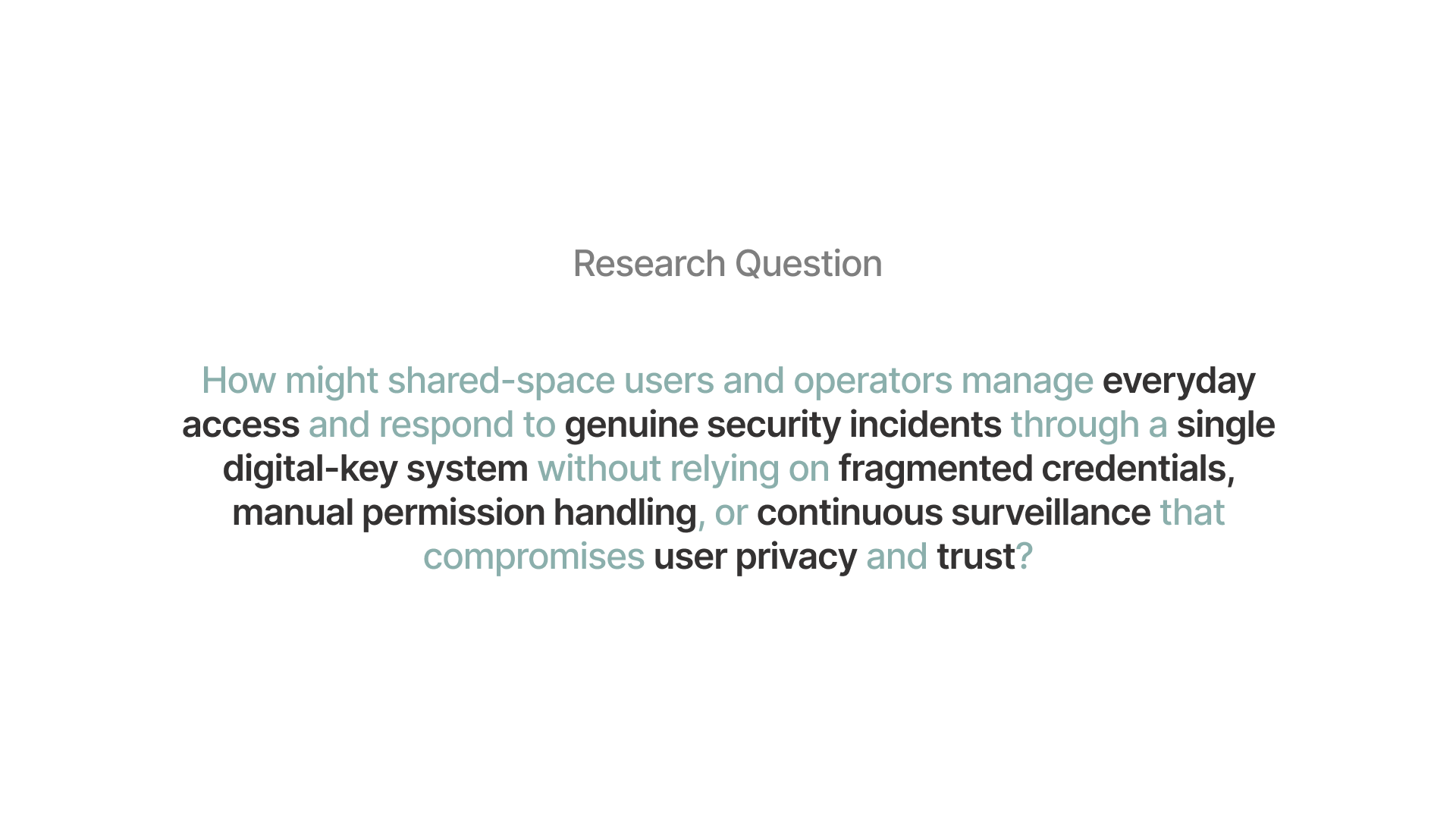
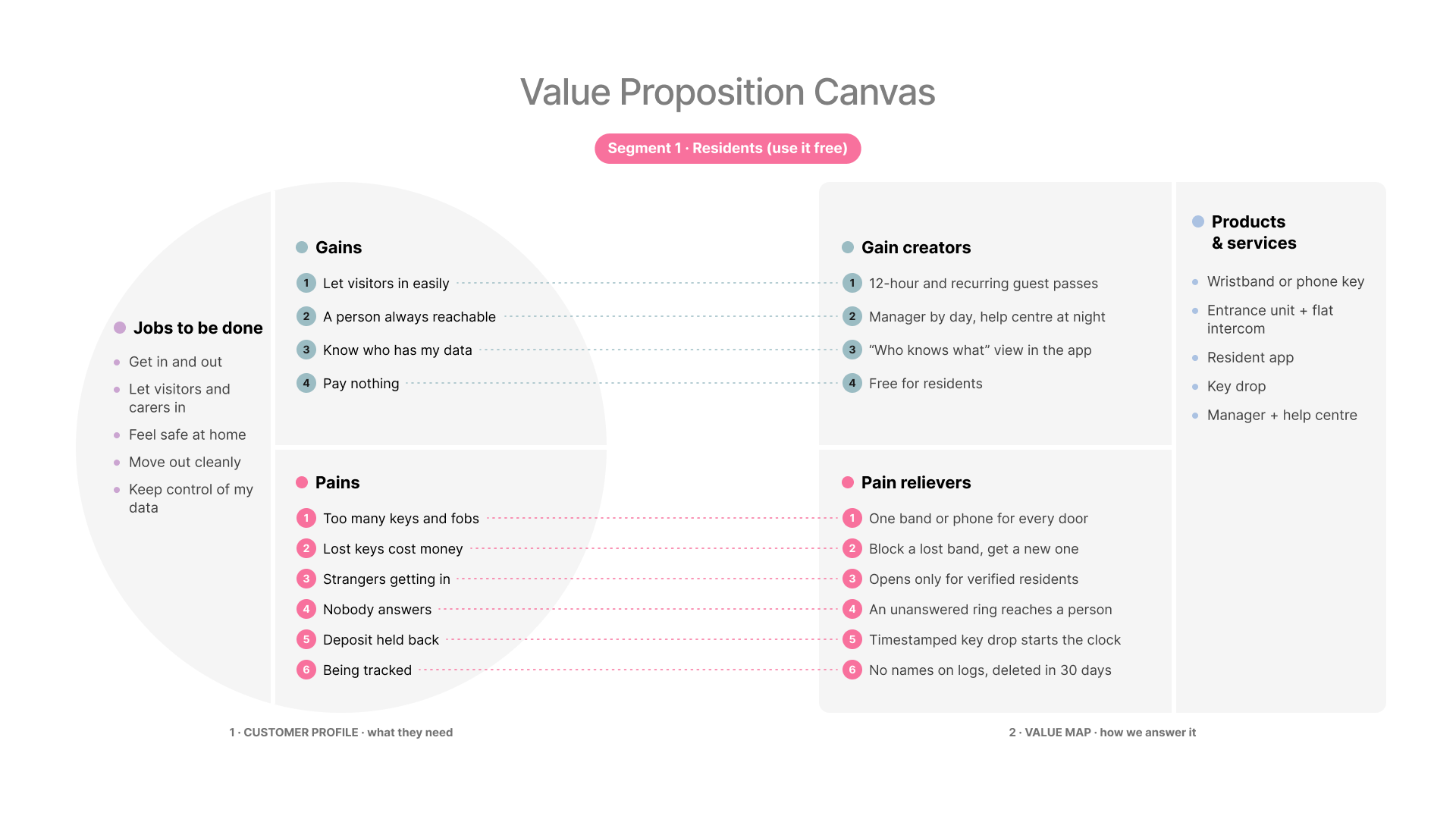
In Barcelona’s shared buildings, a key proves only that you hold it, not that you belong. Residents juggle a fob for every door, strangers slip in behind neighbours, and an 80-year-old ringing for help after hours often reaches no one. Meanwhile, “smart” entry systems quietly collect faces and names. People are asked to trade privacy for safety. This thesis started from one refusal: that trade shouldn’t exist.
2. Listening before designing
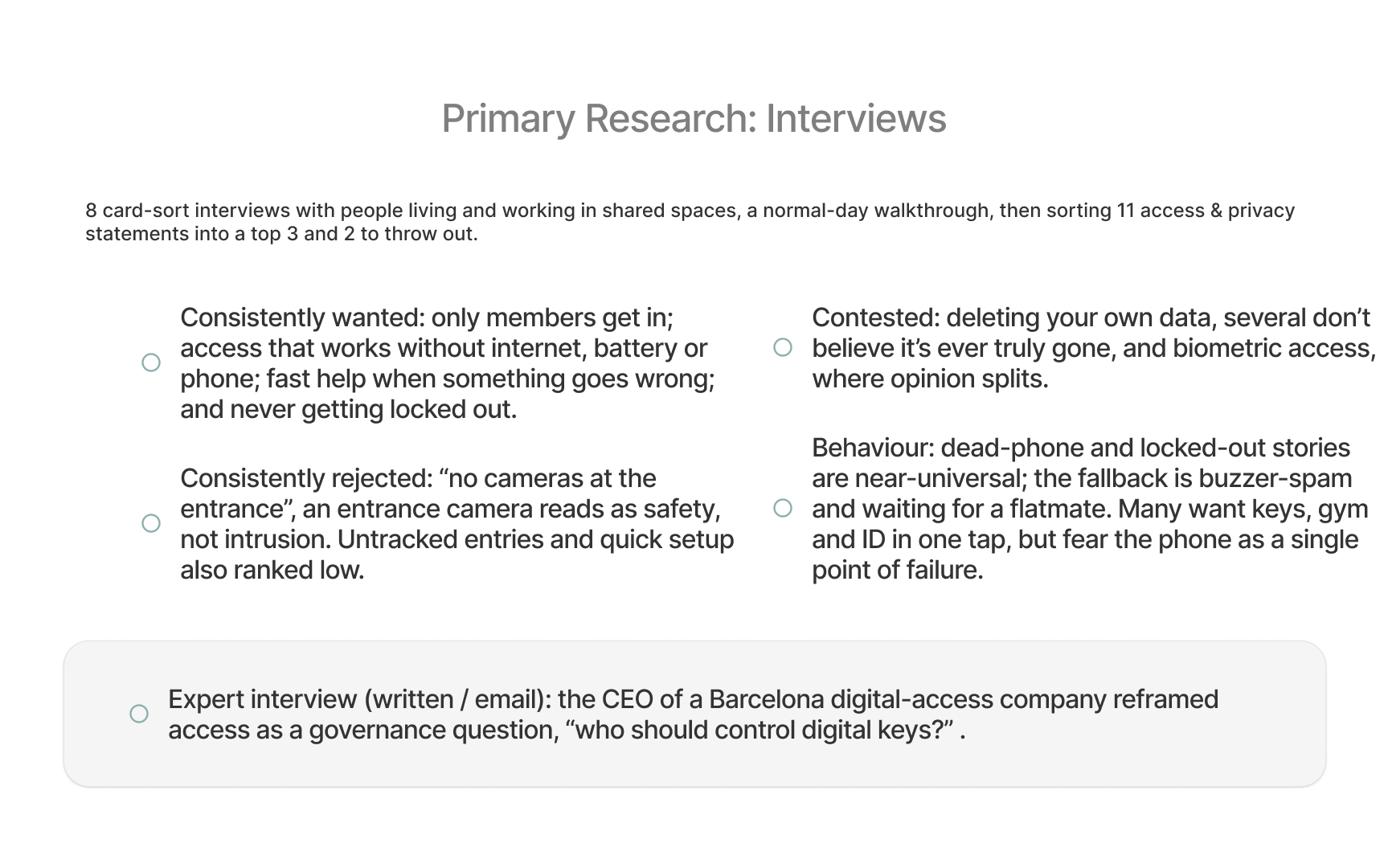
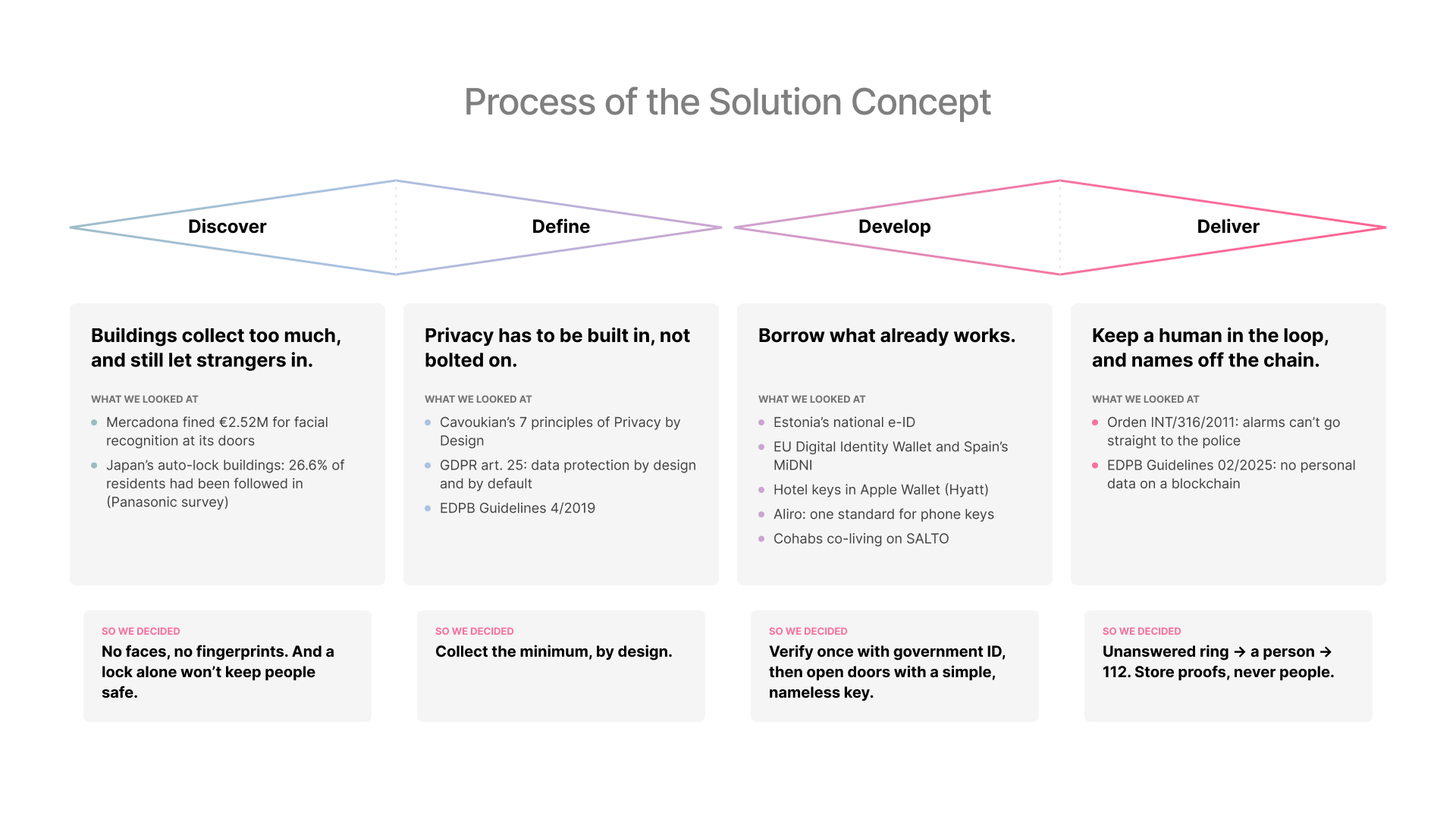
Before sketching a single screen, I went to the street. A bilingual survey of 17 people, eight in-depth interviews (four built around card sorting) and a written interview with the CEO of a Barcelona digital-access company mapped how people really move through their buildings. Alongside, I studied GDPR enforcement, EU guidance on blockchain, Spain’s new digital ID and Japan’s auto-lock flats, building a legal and cultural map before any solution.
3. The trust paradox
The research turned up a contradiction worth designing for. People said privacy didn’t really worry them, yet when offered control, they wanted it badly, above all the right to have their data deleted. Interviewees accepted cameras only in context and openly distrusted deletion promises. The insight reframed everything: trust can’t be asked for; it has to be built into how the system works. Even the expert’s question became mine: who should control digital keys?
4. Meet seudo
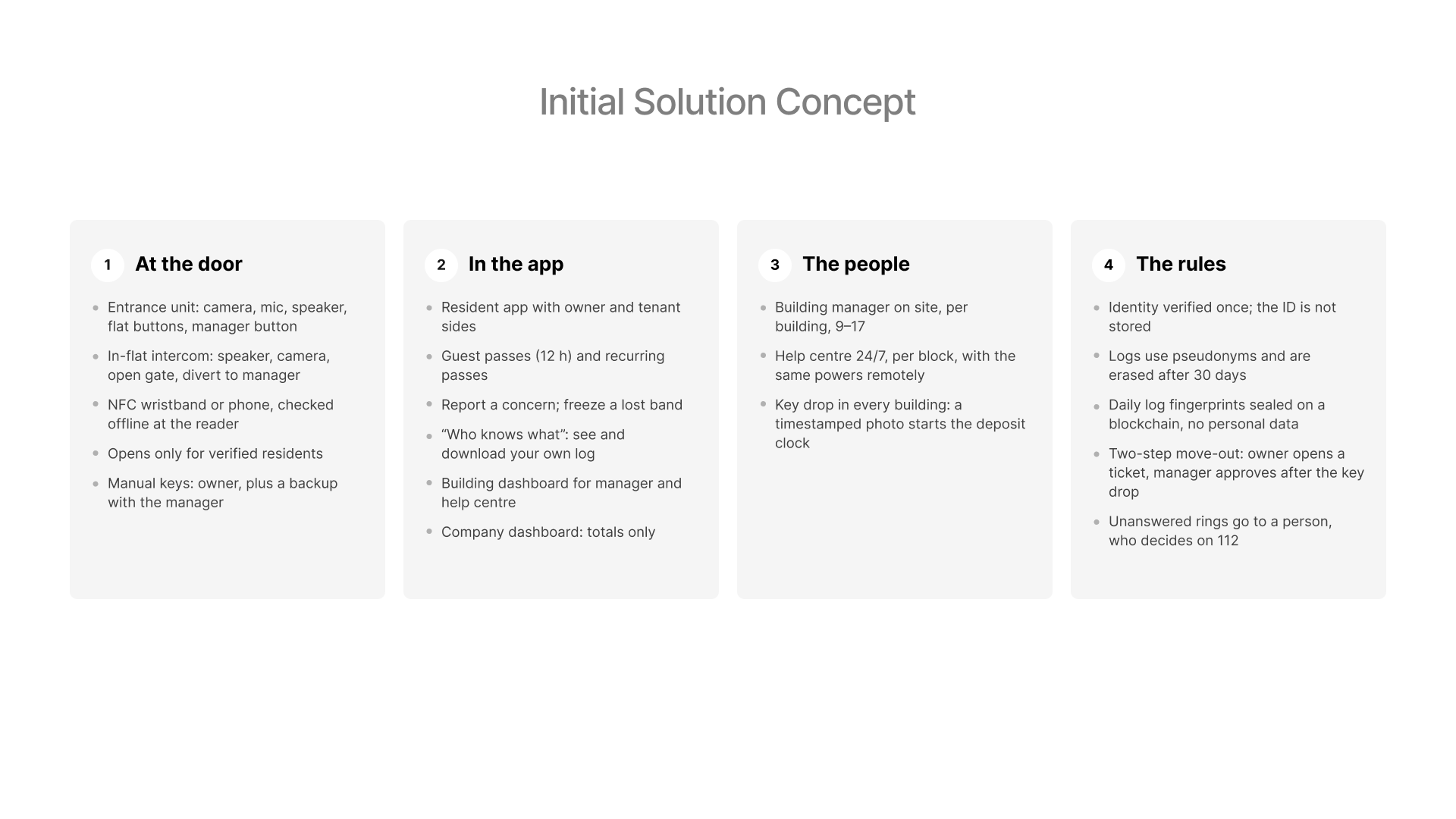
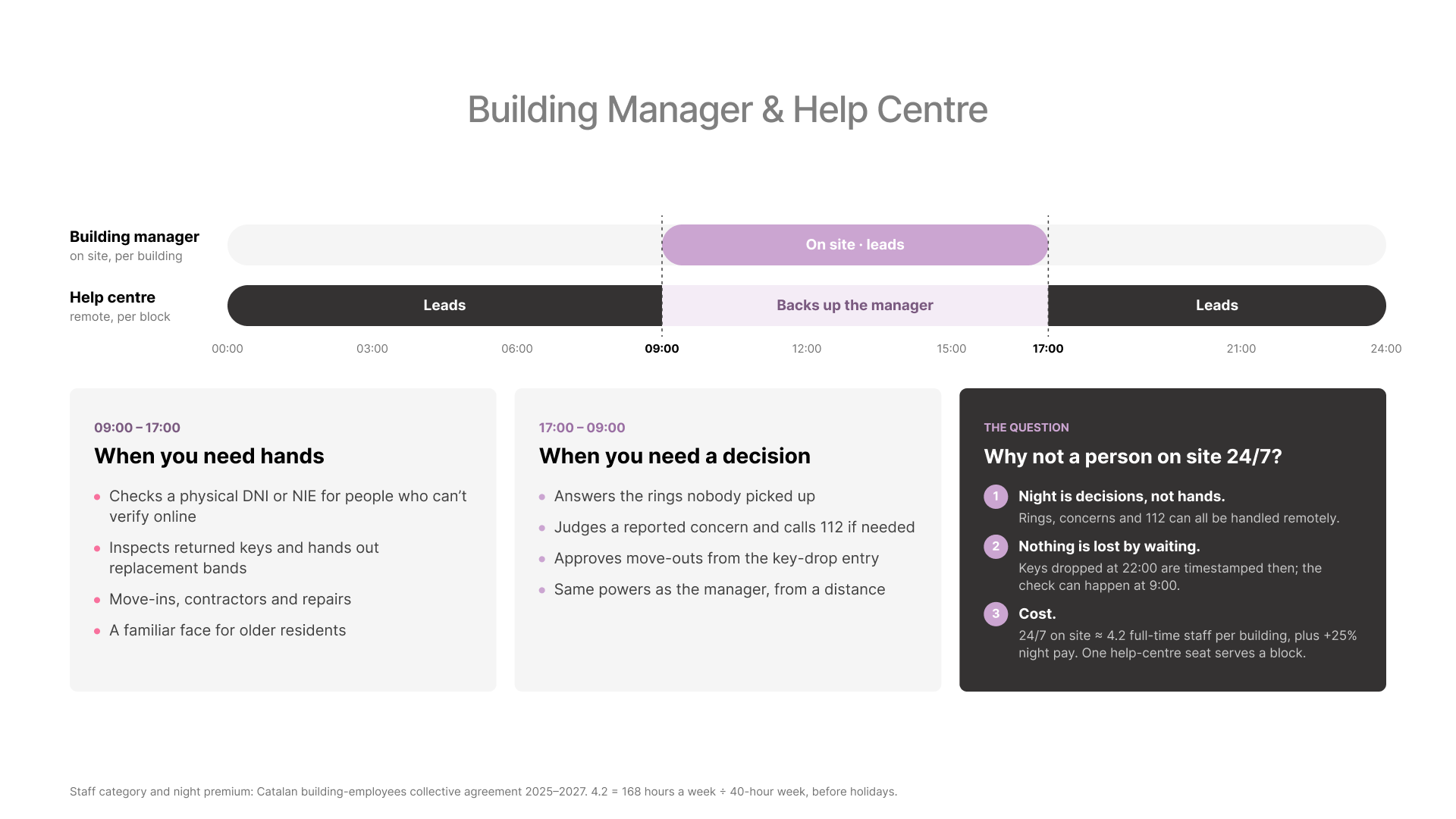
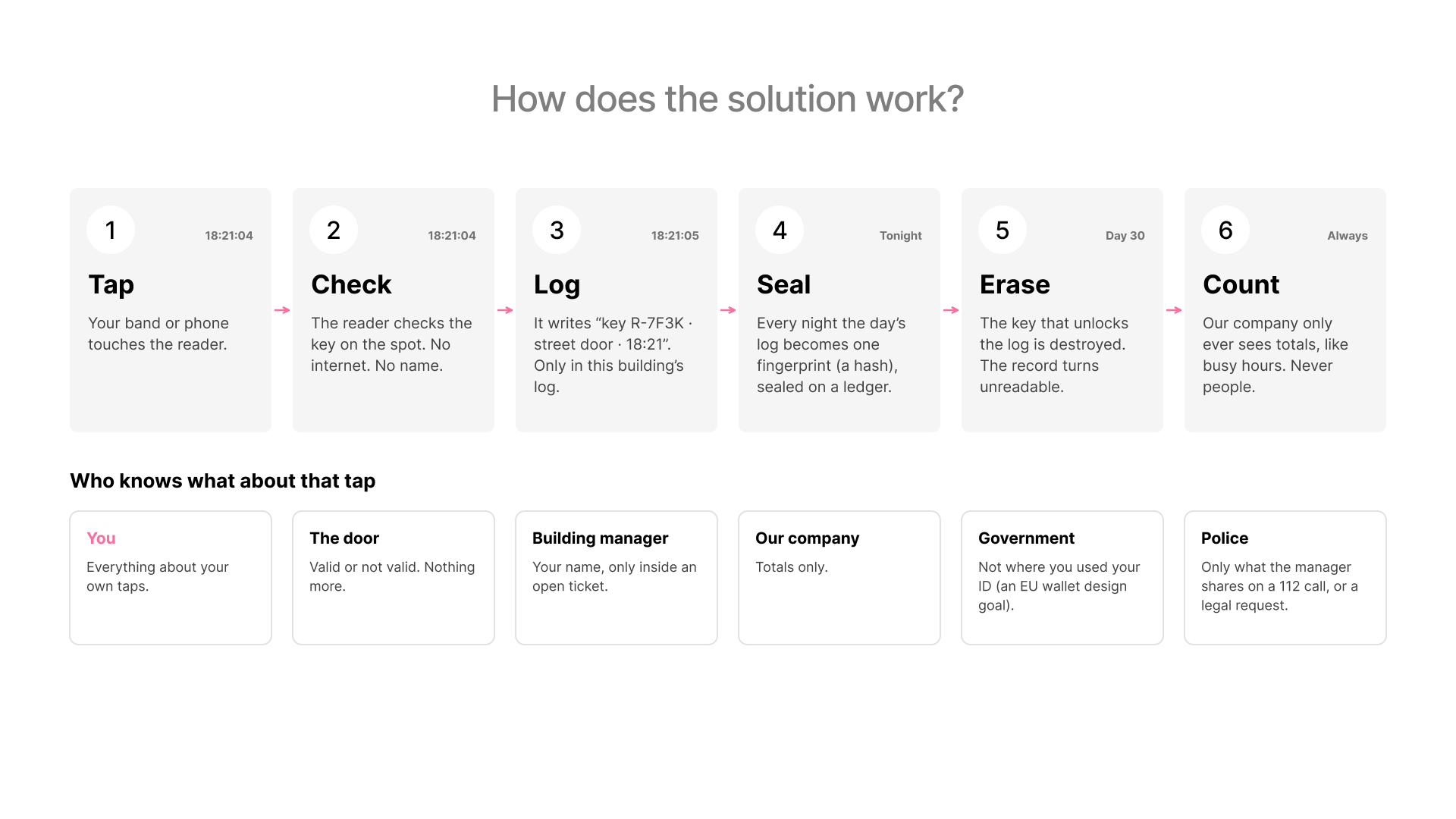
From seudónimo, Spanish for pseudonym: you, without your name. Residents prove who they are once with the EU Digital Identity Wallet, then one nameless wristband opens every door. Doors log a code, never a name. Records erase themselves after 30 days, and a nightly fingerprint on a blockchain proves nothing was altered. When a ring goes unanswered, a person always picks up: a manager by day, a help centre by night.
5. Designed end to end, honest about its limits
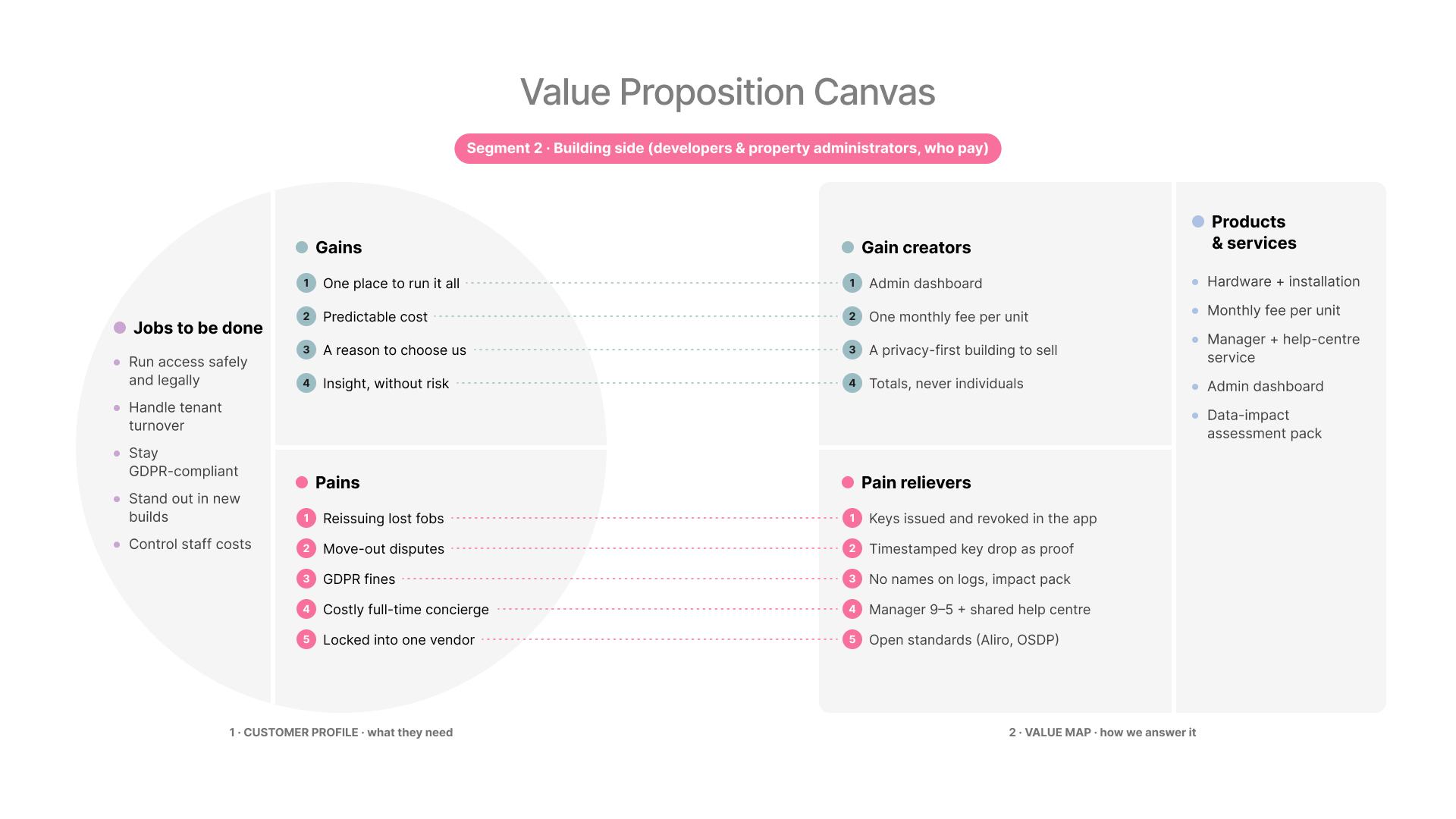
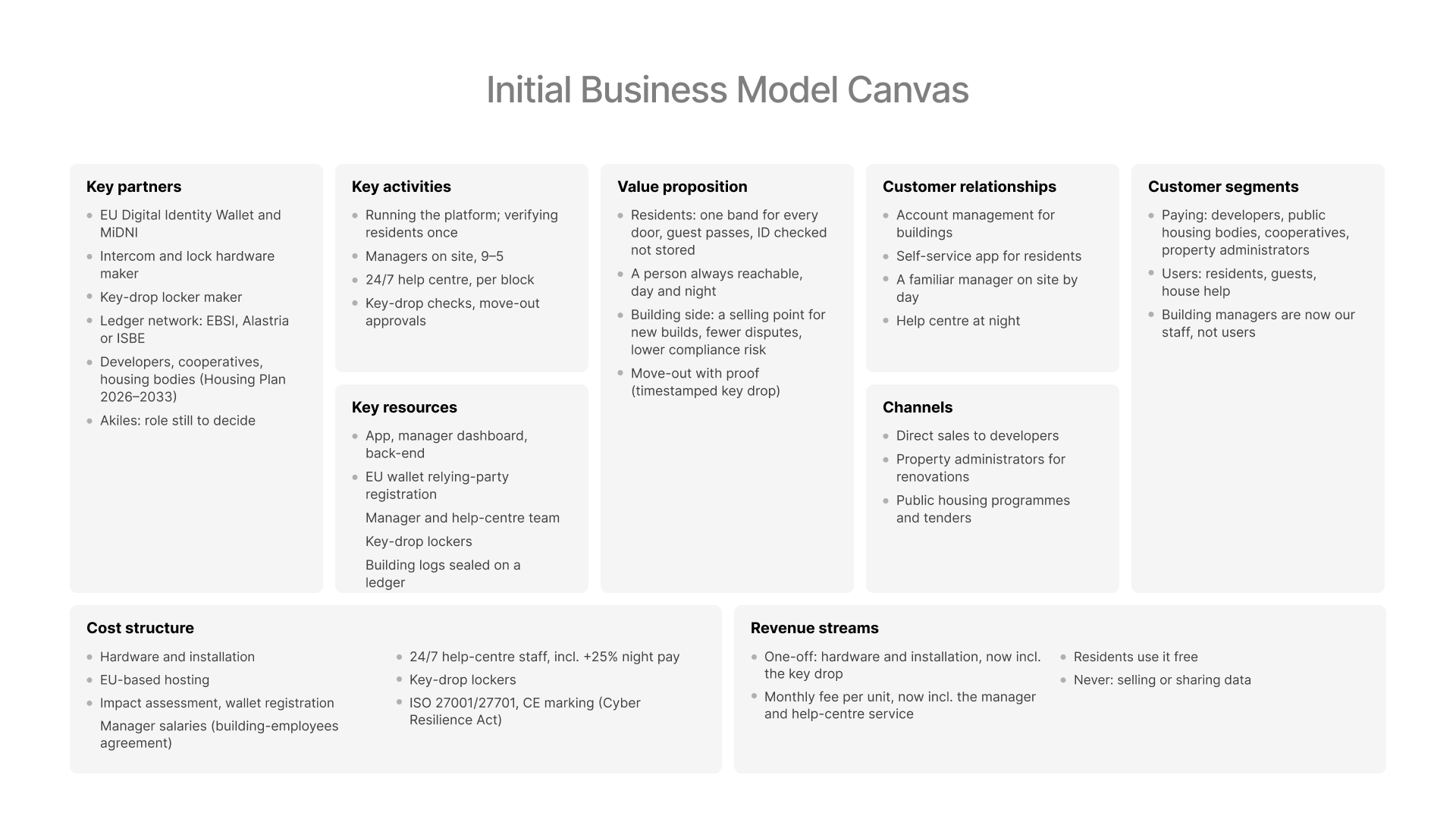
I took seudo from problem clusters and before-and-after storyboards to wireframes for three products: the resident app, the manager’s dashboard and the company’s back office. The business model has buildings pay while residents use it free and never sells their data. A risk map names what seudo can’t fix, like tailgating. Next: prototype, test with older residents and managers, then pilot in a Barcelona housing building.
ValidAIte: GenAI Testing Platform